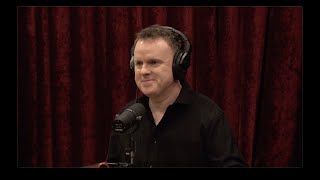
JRE 1423 · February 5, 2020
Andrew Doyle
Who is Andrew Doyle?
Andrew Doyle is a British comedian, playwright, journalist, political satirist and is creator of the fictitious character Titania McGrath. The new book "Woke: A Guide to Social Justice" by Titania McGrath is now available: https://amzn.to/36X2GoG
Topics and Timestamps
- 01Andrew Doyle discusses his character Titania McGrath and how satire is used to critique woke culture and social justice movements
- 02The conversation explores cancel culture, online mobs, and how social media has changed the landscape of comedy and free speech
- 03Doyle explains the difference between satire that punches up versus down, and why his character resonates with audiences across the political spectrum
- 04Discussion of how identity politics and progressive ideology have infiltrated mainstream institutions and corporate culture
- 05Doyle talks about his book 'Woke: A Guide to Social Justice' and what inspired him to create educational content about these movements
- 06The episode covers censorship in comedy, the difficulty of being a political satirist in modern times, and the importance of challenging orthodoxy through humor
- ▶Introduction to Titania McGrath and her origins as a satirical character0:02:30
- ▶Discussion of how satire amplifies real language from actual activists to reveal absurdity0:15:45
- ▶Andrew explains how cancel culture and social media have changed comedy and free speech0:28:15
- ▶Conversation about institutional adoption of woke ideology in universities and corporations0:42:00
- ▶Andrew discusses his book 'Woke: A Guide to Social Justice' and its purpose as satire and education0:58:30
The Show
Andrew Doyle comes on JRE 1423 to talk about his work as a British comedian and political satirist, primarily discussing his famous character Titania McGrath. Titania started as a satire of woke culture and social justice ideology gone to absurd extremes, and the character has become a vehicle for Doyle to critique the progressive left's increasingly rigid dogmatism.
The core of the conversation revolves around how satire functions as social commentary. Doyle explains that his character works because it takes real language, real arguments, and real positions from actual activists and amplifies them just enough to reveal their inherent absurdity. It's not strawmanning if you're directly quoting people. Joe and Andrew discuss how the best satire punches at power and orthodoxy, not down at vulnerable groups, which is what makes Titania's criticism of progressive ideology so sharp.
They dig into cancel culture and how social media has fundamentally changed comedy and public discourse. The algorithm rewards outrage, which incentivizes people to be more extreme in their positions. This creates an environment where comedians have to be more careful about what they say, but also where the woke orthodoxy becomes increasingly extreme and easier to satirize. Andrew talks about how you can't joke about certain topics anymore without facing serious professional consequences, which is a chilling effect on free speech and creative expression.
Doyle discusses identity politics and how institutions have adopted woke ideology as official policy. Universities, corporations, and government agencies now enforce strict ideological conformity. The obsession with identity categories and systemic oppression narratives has become almost religious in nature. He notes that his criticism isn't really about individual activists but about how these ideas have become institutionalized and unquestionable.
The conversation touches on his book 'Woke: A Guide to Social Justice' which serves as both satire and genuine education about these movements. It's structured as if Titania is giving guidance on how to be properly woke, but it's actually exposing the contradictions and absurdities within progressive ideology. Andrew created it because he felt there was a need for accessible content that explains what's actually happening in these spaces without being preachy or academic.
Joe brings up the polarization issue and how difficult it is to have nuanced conversations about these topics. Everyone assumes the worst intentions. Andrew agrees that the stakes have been artificially raised by social media and institutional power. Losing your job for a bad joke is real now. Doyle emphasizes that satirists need to be able to push boundaries and ask uncomfortable questions, otherwise we end up with a completely sanitized culture where nothing meaningful gets discussed.
Best Quotes
“The best satire punches at power and orthodoxy, not down at vulnerable groups”
— Andrew Doyle
From the JRE 1423 conversation with Andrew Doyle.
“You can't joke about certain topics anymore without facing serious professional consequences”
— Joe Rogan
From the JRE 1423 conversation with Andrew Doyle.
“These ideas have become institutionalized and unquestionable”
— Andrew Doyle
From the JRE 1423 conversation with Andrew Doyle.
“The algorithm rewards outrage, which incentivizes people to be more extreme in their positions”
— Joe Rogan
From the JRE 1423 conversation with Andrew Doyle.
“If we end up with a completely sanitized culture, nothing meaningful gets discussed”
— Andrew Doyle
From the JRE 1423 conversation with Andrew Doyle.
Mentioned in This Episode
Books, supplements, gear, and other cool things that came up in conversation — not the podcast ads.
As an Amazon Associate we earn from qualifying purchases.