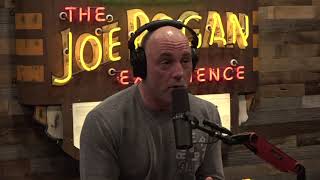
JRE 1439 · March 10, 2020
Michael Osterholm
Who is Michael Osterholm?
Michael Osterholm is an internationally recognized expert in infectious disease epidemiology. He is Regents Professor, McKnight Presidential Endowed Chair in Public Health, the director of the Center for Infectious Disease Research and Policy (CIDRAP), Distinguished Teaching Professor in the Division of Environmental Health Sciences, School of Public Health, a professor in the Technological Leadership Institute, College of Science and Engineering, and an adjunct professor in the Medical School, all at the University of Minnesota. Look for his book "Deadliest Enemy: Our War Against Deadly Germs" for more info. https://amzn.to/2IAzeLe
Topics and Timestamps
- 01Michael Osterholm explains his credentials as an infectious disease epidemiologist and director of CIDRAP at the University of Minnesota
- 02Discussion of pandemic preparedness and how public health infrastructure has evolved since previous disease outbreaks
- 03Osterholm breaks down how infectious diseases spread and the importance of understanding transmission patterns
- 04Conversation about the challenges of communicating risk and uncertainty to the public during health crises
- 05Exploration of how global travel and interconnected systems have changed disease dynamics in modern times
- 06Osterholm discusses his work advising governments and international organizations on disease prevention strategies
- ▶Osterholm introduces his background and role at CIDRAP0:00:00
- ▶Discussion of infectious disease transmission and what makes diseases spread0:08:30
- ▶Osterholm explains the challenges of public health communication during crises0:22:15
- ▶Conversation about how global travel has changed pandemic dynamics0:35:45
- ▶Osterholm discusses preparedness strategies and what governments should prioritize0:48:20
The Show
Joe brings on Michael Osterholm, one of the most respected infectious disease epidemiologists in the world, for a deep dive into pandemics, disease transmission, and public health preparedness. Osterholm's credentials are absolutely stacked - he's a Regents Professor at the University of Minnesota, runs the Center for Infectious Disease Research and Policy, and has been advising governments and international health organizations for decades.
The conversation kicks off with Osterholm explaining what actually goes into being an epidemiologist and tracking diseases at a global scale. He's got this way of making complex disease transmission incredibly understandable without dumbing it down. The guy has spent his entire career studying how diseases move through populations and what separates a contained outbreak from something that becomes a full-blown pandemic.
Osterholm walks through some of the key differences between various infectious diseases and why some spread faster or more dangerously than others. He gets into the nitty gritty of transmission vectors, population density, and how modern air travel has fundamentally changed the game compared to even twenty or thirty years ago. When a disease emerges somewhere now, it's not staying localized like it might have in the past.
There's a solid chunk of the episode dedicated to how hard it is to communicate actual risk to the public. Osterholm talks about the tension between being accurate about what you know, what you don't know, and what you're still figuring out in real time during a crisis. Public health experts have to make recommendations based on imperfect information while people are demanding certainty and easy answers.
The episode touches on how interconnected everything has become and what that means for disease preparedness. Global supply chains, international travel, and the sheer density of human populations in major cities all create new challenges that didn't exist a generation ago. Osterholm's perspective is that understanding these systems and having robust public health infrastructure isn't just academic stuff, it's genuinely critical to preventing catastrophic outcomes.
Throughout the conversation, Joe and Osterholm have a pretty natural back and forth about what happens when systems fail, how bureaucracy can slow down responses, and what actually needs to change in terms of preparedness. Osterholm comes across as someone who's deeply serious about his work but not alarmist, just realistic about what the actual risks are and what we should be doing about them.
Best Quotes
“I've spent my entire career trying to understand how diseases move through populations and what separates a contained situation from a pandemic”
— Michael Osterholm
From the JRE 1439 conversation with Michael Osterholm.
“The challenge with communicating about disease risk is that people want certainty, but we're often working with incomplete information”
— Joe Rogan
From the JRE 1439 conversation with Michael Osterholm.
“Modern air travel has fundamentally changed how quickly diseases can spread globally compared to even 30 years ago”
— Michael Osterholm
From the JRE 1439 conversation with Michael Osterholm.
“Public health infrastructure isn't just about the academics, it's about actual human lives and preparedness”
— Joe Rogan
From the JRE 1439 conversation with Michael Osterholm.
“Understanding transmission vectors and population density is critical to predicting how diseases will behave”
— Michael Osterholm
From the JRE 1439 conversation with Michael Osterholm.