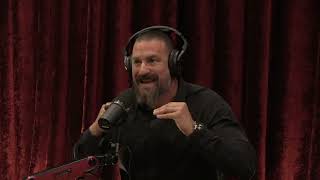
JRE 1513 · July 23, 2020
Andrew Huberman
Who is Andrew Huberman?
Andrew Huberman is a neuroscientist and tenured professor in the Department of Neurobiology at the Stanford University School of Medicine. He has made numerous important contributions to the fields of brain development, brain plasticity, and neural regeneration and repair.
Topics and Timestamps
- 01Huberman explains how light exposure, particularly blue light in the morning, sets your circadian rhythm and improves sleep quality
- 02Exercise timing matters more than just doing it: working out in the afternoon or early evening optimizes hormone release and performance
- 03Sleep is the foundation for everything else - without proper sleep, your nervous system can't recover and learning doesn't consolidate
- 04Neuroplasticity, the brain's ability to rewire itself, requires focused attention and specific protocols to actually work
- 05Cold exposure and deliberate breathing techniques can be used to control your nervous system and improve stress resilience
- 06The brain continues developing into your mid-20s, making early life choices about sleep, exercise, and learning critically important
- ▶Huberman explains the critical importance of morning light exposure for circadian rhythm and sleep quality0:05:30
- ▶Discussion on optimal exercise timing and how afternoon workouts produce better hormonal responses0:18:45
- ▶Huberman breaks down neuroplasticity and why most people misunderstand how the brain actually changes0:32:20
- ▶Cold exposure protocols and how deliberate stress improves nervous system resilience0:48:15
- ▶The cascade effect of sleep deprivation and why it's the foundation for all other optimizations0:58:00
The Show
Joe brings on Andrew Huberman, one of the most interesting neuroscientists working today, and they dive deep into how your brain actually works and how to optimize it. This isn't pseudoscience stuff either - Huberman is a legit tenured professor at Stanford who's made real contributions to understanding brain development, plasticity, and repair.
The conversation centers on practical neuroscience that actually applies to your life. Huberman breaks down how your circadian rhythm isn't some mystical thing but rather a direct result of light exposure, particularly early morning light. Getting bright light in your eyes within the first hour of waking sets your entire day's hormonal cascade. It's not complicated but almost nobody does it right.
They get into exercise and timing, which is fascinating because most people think it doesn't matter when you work out. Wrong. Huberman explains that afternoon or early evening training sessions actually produce better hormonal responses and better sleep quality at night. Your body temperature is naturally higher, your performance is better, and you're not jacking up your nervous system right before bed.
Sleep dominates a huge part of the discussion because, as Huberman emphasizes repeatedly, sleep is the foundation that makes everything else work. Your brain can't consolidate learning without sleep, your immune system tanks, your mental health suffers, and your ability to handle stress plummets. This isn't optional.
One of the coolest parts is when Huberman talks about neuroplasticity and how people completely misunderstand how the brain actually changes. It's not just about doing something a lot. Real neuroplasticity requires intense focused attention, emotional relevance, and then specific protocols for memory consolidation. Your brain has to be primed the right way.
Cold exposure comes up and Huberman explains why dunking in cold water or cold showers aren't just tough guy nonsense. Your body adapts to regular cold exposure in ways that improve your stress resilience and ability to access your parasympathetic nervous system. But there's a right way and a wrong way to do it.
The whole episode is a masterclass in understanding that your brain isn't this separate thing from your body. It's all connected. Your sleep affects your learning, which affects your performance, which affects your confidence, which affects your stress levels, which affects your sleep. It's a system, and understanding the fundamentals means you can actually optimize it instead of just guessing.
Best Quotes
“Sleep is not a luxury, it's a biological necessity that underlies everything else you're trying to do”
— Andrew Huberman
From the JRE 1513 conversation with Andrew Huberman.
“Your circadian rhythm is set by light, not by when you think it should be set. Get bright light in your eyes early”
— Joe Rogan
From the JRE 1513 conversation with Andrew Huberman.
“Real neuroplasticity requires attention, emotion, and then specific protocols. You can't just do something and expect your brain to change”
— Andrew Huberman
From the JRE 1513 conversation with Andrew Huberman.
“Exercise in the afternoon actually gives you better hormonal responses and better sleep at night than morning training”
— Joe Rogan
From the JRE 1513 conversation with Andrew Huberman.
“Cold exposure is just another tool for training your nervous system to handle stress more efficiently”
— Andrew Huberman
From the JRE 1513 conversation with Andrew Huberman.