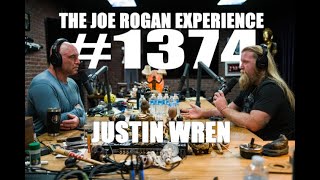
JRE 1602 · June 27, 2024
Justin Wren
Who is Justin Wren?
Justin Wren is a professional mixed martial artist, humanitarian aid-worker, and founder of Fight for the Forgotten: a non-profit benefiting the Mbuti Pygmy people of the Congo.
Topics and Timestamps
- 01Justin Wren discusses his transition from professional MMA fighter to humanitarian aid worker in the Congo
- 02Fight for the Forgotten nonprofit works directly with the Mbuti Pygmy people, providing clean water, education, and economic opportunities
- 03Wren describes the exploitation and discrimination the Mbuti face from neighboring tribes and colonial systems
- 04The conversation covers Wren's personal spiritual journey and how it led him to dedicate his life to helping others
- 05Discussion of practical challenges in building infrastructure and sustainable change in remote Congo villages
- 06Wren explains how fighting and humanitarian work share similar mental discipline and purpose-driven mentality
- ▶Justin explains founding Fight for the Forgotten and his transition from MMA to humanitarian work0:05:00
- ▶Discussion of the exploitation and discrimination the Mbuti Pygmy people face0:15:30
- ▶Wren describes the practical challenges of building water systems and infrastructure in the Congo0:35:00
- ▶Justin talks about his spiritual journey and how it redirected his purpose from fighting to service0:50:00
- ▶Joe and Justin discuss how the mental discipline of MMA translates to sustained humanitarian work1:15:00
The Show
Justin Wren brings an intensity to JRE 1602 that's different from the typical fighter guest. Yeah, he's got that MMA background, but the real story here is how this guy basically left the sport to become a full-time humanitarian worker in one of the hardest places on Earth. He founded Fight for the Forgotten, and it's not just some vanity charity where you throw money at a problem. Wren actually goes out to the Congo and works directly with the Mbuti Pygmy people.
The Mbuti situation is darker than most people realize. These are indigenous people who've been systematically exploited and oppressed for centuries. They face discrimination from neighboring tribes, they don't have access to clean water, education is basically nonexistent, and they're treated like second-class citizens in their own land. Wren talks about the reality of walking into villages and seeing kids with preventable diseases, communities with zero economic opportunity. It's heavy stuff, but he doesn't get preachy about it. He just lays out what's happening and what needs to change.
What's interesting is how Wren connects his fighting background to this work. Both require the same mental toughness, the same commitment to showing up every day even when things are brutal. In the cage you're facing physical challenges. In the Congo you're facing systemic poverty, infrastructure problems, and resistance from people who benefit from keeping the Mbuti marginalized. The discipline translates.
The conversation gets into the spiritual side too. Wren's undergone a genuine transformation from being a pro fighter focused on competition to someone motivated by service. He talks about his internal journey, the shifts in consciousness that made him realize his purpose was bigger than winning fights. Joe and Justin dig into what that actually means and how you make that transition without losing your edge or becoming naive about how change actually happens.
Wren also breaks down the practical work. Fight for the Forgotten isn't just dropping supplies. They're building water systems, establishing education programs, creating economic opportunities so people can actually sustain themselves long term. He's realistic about the obstacles. Government corruption, logistical nightmares, cultural differences, the sheer difficulty of building infrastructure in remote areas. But he's also clear that the work is possible and that there are real wins happening on the ground.
The whole episode functions as a master class in purpose and commitment. Wren could be making way more money still fighting or doing UFC commentary. Instead he's in the Congo dealing with real problems. Joe respects that approach, and you get the sense he's genuinely moved by what Wren's built with Fight for the Forgotten.
Best Quotes
“The Mbuti people have been oppressed and exploited for centuries. They're treated as less than human by neighboring communities.”
— Justin Wren
From the JRE 1602 conversation with Justin Wren.
“Fighting taught me discipline, but this work requires the same toughness applied to a bigger purpose.”
— Joe Rogan
From the JRE 1602 conversation with Justin Wren.
“We're not just giving handouts. We're building systems that allow communities to sustain themselves long term.”
— Justin Wren
From the JRE 1602 conversation with Justin Wren.
“My spiritual awakening made me realize that fighting in the cage wasn't what I was supposed to do with my life.”
— Joe Rogan
From the JRE 1602 conversation with Justin Wren.
“Every day in the Congo is harder than any fight I've had, but the impact is real and measurable.”
— Justin Wren
From the JRE 1602 conversation with Justin Wren.