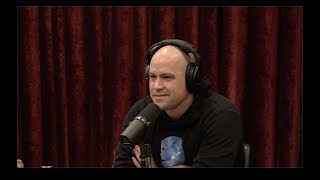
JRE 1883 · June 27, 2024
Ryan Graves
Who is Ryan Graves?
Former Lt. U.S. Navy and F/A-18F pilot Ryan Graves was the first active duty pilot to publicly disclose regular sightings of Unidentified Aerial Phenomenon (UAP). Today, Graves serves as first Chair of the American Institute of Aeronautics and Astronautics UAP Community of Interest, and is the Director of Business Development at Quantum Generative Materials. www.uncertainvector.com
Topics and Timestamps
- 01Ryan Graves was the first active duty Navy pilot to publicly disclose regular UAP sightings while flying F/A-18F Super Hornets
- 02Graves and other pilots witnessed multiple UAP incidents off the coast of Virginia with radar confirmation and multiple eyewitnesses
- 03The encounters showed objects moving in ways that defied conventional physics and understanding of aircraft capabilities
- 04Graves discusses the stigma pilots faced reporting UAP sightings and why he decided to break the silence
- 05He now serves as Chair of the American Institute of Aeronautics and Astronautics UAP Community of Interest
- 06The conversation covers government transparency, military protocols for UAP reporting, and the need for scientific investigation
- ▶Ryan explains his background as F/A-18F pilot and first active duty officer to publicly disclose UAP sightings0:00:00
- ▶Discussion of the specific UAP encounters off the Virginia coast with radar confirmation0:15:30
- ▶Graves describes the culture of silence and stigma around UAP reporting in the military0:28:45
- ▶Detailed account of object movements and characteristics that defy conventional physics0:42:20
- ▶Graves discusses his decision to go public and the personal costs of breaking the silence0:58:15
The Show
Ryan Graves sits down with Joe to discuss his groundbreaking decision to publicly disclose UAP sightings as an active duty Navy pilot, something that carried significant personal and professional risk. Graves flew F/A-18F Super Hornets and witnessed multiple encounters off the Virginia coast that involved objects performing maneuvers inconsistent with any known aircraft or natural phenomenon. What makes his testimony particularly compelling is that these weren't isolated incidents from a single pilot but were observed by multiple trained observers and confirmed on radar systems.
Graves explains the culture of silence that exists in the military around UAP sightings. Pilots knew that reporting these encounters could damage their careers and credibility, leading to an institutional suppression of data that should be valuable to national security and scientific understanding. He discusses the specific incidents in detail, describing objects that appeared to operate without any visible means of propulsion, moved at speeds that seemed impossible given their size, and demonstrated awareness of the pilots' presence.
One of the most interesting aspects of Graves' testimony is how he addresses the gap between what pilots and military personnel actually witness versus what gets officially documented or released to the public. The military has protocols for reporting UAP, but those reports often disappear into bureaucratic channels without any feedback to the observers or meaningful investigation. Graves became frustrated with this system and felt a moral obligation to step forward.
The conversation touches on the scientific approach needed to investigate these phenomena. Graves emphasizes that he's not claiming these are aliens, but rather that the sightings represent something that doesn't fit current understanding of physics or engineering. He argues for open scientific inquiry rather than dismissal or classification. Joe and Ryan discuss the implications if these objects are indeed non-human technology, and what that would mean for humanity's understanding of the world.
Graves also addresses the personal cost of coming forward. Speaking publicly about UAP sightings meant dealing with ridicule from peers, potential career consequences, and entering a space where credibility is constantly questioned. But he felt that the importance of transparency and the public's right to know outweighed these personal costs. His willingness to testify before Congress and speak publicly has helped legitimize the discussion of UAP in mainstream conversations.
The episode covers his current work as Director of Business Development at Quantum Generative Materials and his role with the aeronautics institute's UAP community of interest. These positions allow him to continue investigating these phenomena from a different angle while bringing credibility and scientific rigor to what was previously relegated to conspiracy theory territory. Graves represents a shift in how UAP are discussed, moving from fringe topic to legitimate area of inquiry worthy of serious investigation.
Best Quotes
“We were seeing things on radar that we weren't seeing with our eyes, and that was strange to us.”
— Ryan Graves
From the JRE 1883 conversation with Ryan Graves.
“The pilots knew that if they reported this, their career could be over. That's the environment we were operating in.”
— Joe Rogan
From the JRE 1883 conversation with Ryan Graves.
“This isn't about aliens necessarily. This is about objects that don't match any known physics that we understand.”
— Ryan Graves
From the JRE 1883 conversation with Ryan Graves.
“I felt a moral obligation to step forward because people deserve to know what's actually happening.”
— Joe Rogan
From the JRE 1883 conversation with Ryan Graves.
“We need to approach this with scientific rigor, not dismissal and not wild speculation.”
— Ryan Graves
From the JRE 1883 conversation with Ryan Graves.