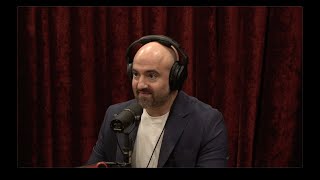
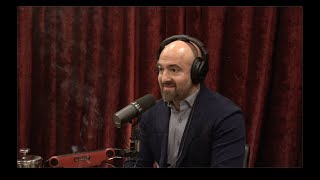
JRE 2237 · December 3, 2024
Mike Benz
Who is Mike Benz?
Mike Benz is a former official with the U.S. Department of State and current Executive Director of the Foundation For Freedom Online, is a free speech watchdog organization dedicated to restoring the promise of a free and open Internet.
Topics and Timestamps
- 01Mike Benz explains his role at the Foundation For Freedom Online and how government agencies have been coordinating with tech platforms to censor content
- 02Discussion of how the U.S. State Department weaponized the internet as a tool of foreign policy and information control
- 03The mechanics of how fact-checking organizations and content moderation systems became extensions of government messaging
- 04How the COVID-19 pandemic accelerated and normalized censorship infrastructure that was already being built
- 05The revolving door between government officials and tech company leadership that enables coordinated speech suppression
- 06The implications for free speech and open internet if current trends in government-tech collaboration continue unchecked
- ▶Mike Benz explains his background at the State Department and Foundation For Freedom Online mission0:00:00
- ▶Discussion of direct coordination between U.S. government agencies and tech platforms on content moderation0:15:00
- ▶How the COVID-19 pandemic was used to normalize and expand censorship infrastructure0:35:00
- ▶Explanation of the revolving door between government officials and tech company leadership1:00:00
- ▶Benz outlines the geopolitical strategy behind controlling internet narratives as foreign policy1:45:00
The Show
Joe sits down with Mike Benz, former State Department official and Executive Director of the Foundation For Freedom Online, to discuss one of the most pressing issues facing the internet today: coordinated censorship between government and big tech. Benz brings serious credentials to the conversation, having worked inside the State Department and now running an organization dedicated to protecting free speech online.
The core of what Benz is arguing is that the U.S. government hasn't been subtle about using tech platforms as extensions of state power. He breaks down how various agencies, particularly during the COVID era, would directly coordinate with platforms like Facebook, Twitter, and YouTube to suppress content they deemed problematic. This wasn't just organic content moderation. This was systematic, coordinated, and came from the top down. Benz explains the mechanics of how fact-checkers became tools of government narrative control, how NGOs got funding to legitimize censorship, and how the whole apparatus was sold to the public as necessary for fighting misinformation.
What's particularly wild about Benz's account is the revolving door aspect. People move between government jobs and tech company leadership. The relationships are baked in. It's not shadowy or hidden. These people know each other, they talk to each other, and they work together on what they call protecting the information environment. From their perspective, they're managing narratives in the national interest. From Benz's perspective, they're undermining the fundamental principles of free speech that the internet was supposed to enable.
Joe pushes back on some of it, asking reasonable questions about where the line is between preventing actual harmful content and censoring legitimate debate. Benz acknowledges the tension but argues that the current system has swung way too far toward suppression. The pandemic was a turning point. Suddenly it was acceptable to remove posts about COVID treatments, lab origins, vaccine effectiveness, and anything that contradicted official guidance. Once that infrastructure was normalized, it didn't go away.
The conversation gets into the geopolitical angle too. The State Department saw controlling internet narratives globally as a foreign policy tool. If you could shape what Americans see online, you could shape American foreign policy sentiment. It's information warfare applied domestically. Benz presents this not as conspiracy theory but as explicit government strategy that was openly discussed in policy circles.
The whole thing is framed as about protecting democracy and fighting disinformation, but Benz argues the actual effect is the opposite. When government can effectively silence dissenting voices through tech platforms, that's not a healthy democracy. That's something closer to state control of information. And once that power exists, who's to say the next administration won't use it differently or more aggressively.
This episode is important because Benz actually worked in these systems. He's not speculating from the outside. He's explaining how the machinery actually operates from someone who saw it up close. Whether you buy his entire thesis or not, the conversation forces you to think about what free speech actually means when there's coordinated pressure from government and the largest communication platforms in the world.
Best Quotes
“The government didn't just ask nicely. There was real pressure, real coordination, real consequences for not complying.”
— Mike Benz
From the JRE 2237 conversation with Mike Benz.
“Once you build the infrastructure to censor during a crisis, it doesn't disappear when the crisis ends.”
— Joe Rogan
From the JRE 2237 conversation with Mike Benz.
“Free speech doesn't mean much if government can pressure tech platforms to silence you.”
— Mike Benz
From the JRE 2237 conversation with Mike Benz.
“People move between government and tech companies all the time. The relationships are baked in.”
— Joe Rogan
From the JRE 2237 conversation with Mike Benz.
“This is information warfare, but it's being applied domestically under the guise of preventing misinformation.”
— Mike Benz
From the JRE 2237 conversation with Mike Benz.