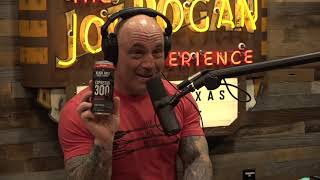
JRE 2467 · March 12, 2026
Michael Pollan
Who is Michael Pollan?
Michael Pollan is an author and journalist whose books include “The Omnivore’s Dilemma,” “In Defense of Food,” and “How to Change Your Mind." His most recent is “A World Appears: A Journey into Consciousness."
Topics and Timestamps
- 01Michael Pollan's new book 'A World Appears' explores consciousness through psychedelic experiences and meditation, moving beyond traditional neuroscience frameworks
- 02The hard problem of consciousness remains unsolved after 27 years - scientists can't explain how matter generates subjective experience despite finding neural correlates
- 03Pollan discusses pansychism, the antenna theory of consciousness, and why the brain might be receiving rather than generating consciousness
- 04Psychedelics and meditation serve as tools to recover childhood 'lantern consciousness' - unfocused awareness - compared to adult 'spotlight consciousness' needed for work
- 05Pollan spent days alone in a cave at a Zen retreat center, discovering how solitude softens the sense of self and reveals consciousness through direct experience rather than intellectual analysis
- 06The conversation explores how ritual, flow states, and losing the ego through awe experiences provide access to consciousness that drugs, running, or any focused activity can facilitate
- ▶Pollan describes the inspiration for 'A World Appears' coming from garden experience0:00:30
- ▶Discussion of the hard problem of consciousness and the lost Koch-Chalmers bet0:02:15
- ▶Exploration of pansychism, the combination problem, and consciousness theories0:05:00
- ▶Pollan's experience in the cave and the softening of sense of self through solitude0:45:00
- ▶Discussion of flow states, creative writing, and getting out of your own way0:30:00
The Show
Joe has Michael Pollan back to discuss his latest book 'A World Appears: A Journey into Consciousness.' The conversation kicks off with what inspired the book - Pollan's psychedelic research trips and a powerful garden experience where he felt the plants were conscious and returning his gaze. That led him down a rabbit hole exploring plant consciousness and the fundamental mystery of how consciousness actually works.
They dig into the hard problem of consciousness, which Pollan frames through the famous bat thought experiment involving philosophers David Chalmers and neuroscientist Christof Koch. Back in the 90s, Koch bet Chalmers that scientists would solve consciousness within 25 years. Chalmers won the bet. The core issue is that science relies on third-person objective measurements, but consciousness is fundamentally a first-person subjective experience. Koch recently presented Chalmers with a case of fine Madeira wine at NYU and renewed the bet for another 25 years. Pollan explains that despite correlating certain brain regions with consciousness, we still have no idea how three pounds of matter generates subjective experience.
The discussion moves through different theories - the traditional view that neurons generate consciousness, the antenna theory where the brain receives consciousness, and pansychism where everything has consciousness. Pollan admits he went in assuming the neuron model but found nothing definitive. He explores how these theories address different problems: if consciousness was always here via pansychism, you solve the evolution problem but face the combination problem - how do conscious particles combine into a unified conscious experience?
They talk about psychedelics as a tool for consciousness exploration. Joe brings up how psychedelics reveal our vulnerability and make control freaks paranoid because they're suddenly aware of what they normally suppress. Pollan agrees that surrender is essential - resistance creates anxiety. He mentions how MDMA and psilocybin therapies are helping veterans and trauma survivors in ways SSRIs can't, and how political hesitation is slowing FDA approval despite administration support.
The conversation shifts to different types of consciousness. Pollan describes spotlight consciousness versus lantern consciousness - focused attention versus the open, wandering awareness kids have and adults recover on psychedelics. He explains how psychedelics create that childlike state of wonder and sensory overload. Joe adds that the same thing happens with marijuana for people who aren't control freaks, while those deeply invested in their image tend to hate it.
They explore how other activities create similar states. Joe talks about archery clearing his mind, Pollan mentions runner's high and awe experiences. There's a cool study where people draw themselves smaller after witnessing awe-inspiring moments because their sense of self shrinks. Joe argues that once you're competent at something, you should stop thinking about self-esteem and just focus on the craft - that's when flow happens.
This leads to discussing writing and creativity. Pollan explains how great writing comes through a trance-like state where sentences flow without conscious effort. Joe brings up Stephen King writing Cujo while obliterated on cocaine and alcohol, having no memory of it, which illustrates how getting out of the way of your own consciousness can unlock creativity. Pollan discusses his own coffee ritual and how three months without caffeine gave him ADHD-like symptoms. They talk about how Stephen King found quitting cigarettes harder than drugs because of the ritualistic component.
The final major section covers Pollan's cave experience. Joan Halifax, a Zen teacher and former LSD researcher, invited him to her retreat center north of Santa Fe. Instead of intellectualizing about the self, she sent him to live alone in a primitive cave for days with no power or water. Through meditation and ritual activities like chopping wood and making tea, his sense of self softened. He found selves from different ages when he tried David Hume's introspection exercise under hypnosis with psychiatrist David Spiegel - the bar mitzvah boy, the college kid, the new father - all distinct but all him. The cave experience revealed that our sense of self depends on social friction with others, and in extreme solitude, those edges blur. Halifax told him she'd divested in meaning, representing Zen's rejection of intellectual interpretation in favor of direct experience.
Best Quotes
“Consciousness is like smudging the windshield that you normally see through - suddenly you realize there's something between me and the world and what is it? That's consciousness.”
— Michael Pollan
From the JRE 2467 conversation with Michael Pollan.
“You have this marvel going on in your head all the time - an interior space where you have complete mental freedom, total privacy, we can think whatever we want and we're giving it away with drugs and social media.”
— Joe Rogan
From the JRE 2467 conversation with Michael Pollan.
“I went into it thinking I may not solve consciousness but I'm going to appreciate it, use it, and create a space for it through meditation, psychedelics, or other ways to explore what's there, which is miraculous.”
— Michael Pollan
From the JRE 2467 conversation with Michael Pollan.
“Once you get competency in a thing, forget about the self-respect and self stuff and just concentrate on the thing itself - that's when you find flow.”
— Joe Rogan
From the JRE 2467 conversation with Michael Pollan.
“Our sense of self depends on other people - it's in the friction between people that we define ourselves. In extreme solitude, the edges of yourself kind of soften in a really interesting way.”
— Michael Pollan
From the JRE 2467 conversation with Michael Pollan.
Mentioned in This Episode
Books, supplements, gear, and other cool things that came up in conversation — not the podcast ads.
A World Appears: A Journey into Consciousness
AmazonMichael Pollan's latest book exploring consciousness through psychedelic experiences, meditation, plant consciousness, and the hard problem of understanding subjective experience.
How to Change Your Mind
AmazonPollan's earlier book on psychedelics that inspired the consciousness research featured in his new work.
The Omnivore's Dilemma
AmazonOne of Pollan's foundational books exploring food systems and agriculture.
In Defense of Food
AmazonPollan's book on nutrition and food culture.
Armra Colostrum
AmazonColostrum supplement for gut health, immunity, and workout recovery mentioned as JRE sponsor.
As an Amazon Associate we earn from qualifying purchases.